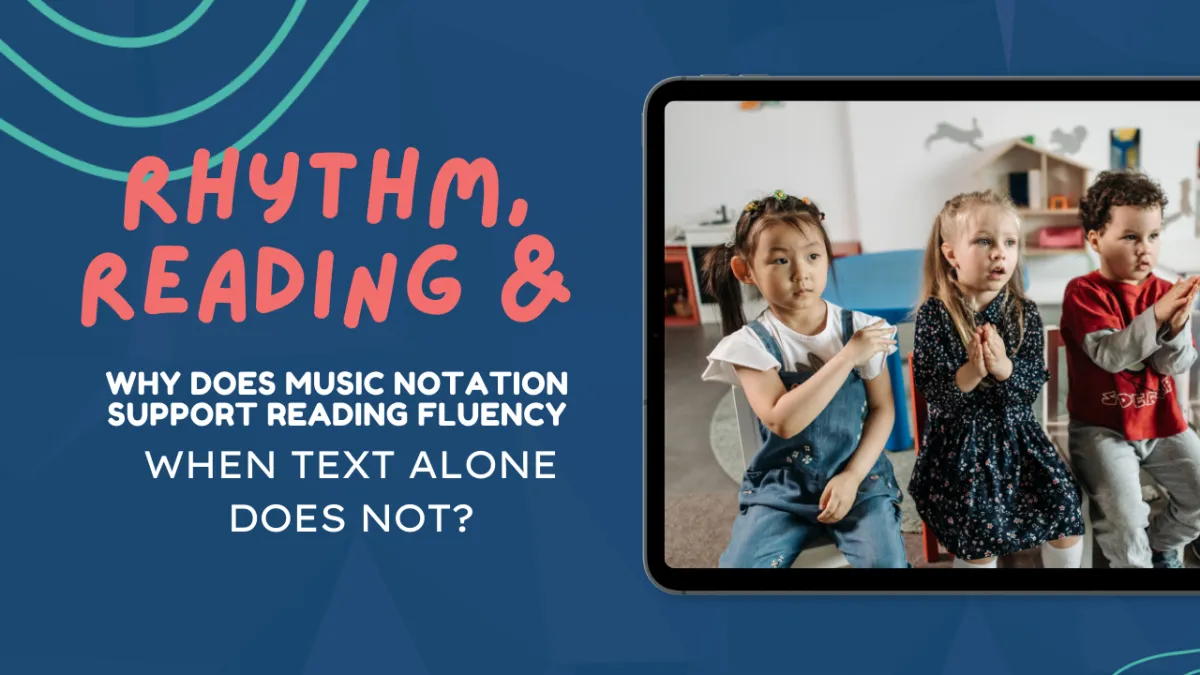
Musical Notation as a Cognitive Scaffold: Why Rhythm Supports Reading Fluency When Text Alone Does Not

How musical notation makes rhythm visible, supporting attention, prediction and reading fluency. Explores neuroscience, timing and learning.

How musical notation makes rhythm visible, supporting attention, prediction and reading fluency. Explores neuroscience, timing and learning.

Improving children’s sensitivity to rhythm helps their focus, phonemic awareness, reading fluency, accuracy and comprehension. In this post, I reference rhythm as a natural aspect of our biology and using real examples, demonstrate the importance of making rhythm a priority for lower attaining readers.

I enjoyed meeting the Executive Head very much. We talked about the Rhythm for Reading programme - how it all began with a group of children who had free music lessons and free school meals. They had been showcased in the school's Ofsted inspection.

“It’s only an hour that they have with you over the time that you come in over the six weeks and for it to be able to make, for a lot of them, up to a year’s difference in their reading ability is quite amazing really.” Year 3 teacher
© Copyright 2026 Rhythm for Reading Services Ltd All Rights Reserved. - Privacy Policy - Terms & Conditions